





Removing mildew stains from an awning
depending on the fabric
Dark spots in the fabric of an awning over a patio or garden are usually mildew stains, in other words mould. They appear when the fabric is pushed together or stored while damp. Which treatment helps depends on the fabric: Agora and Sunbrella tolerate a diluted bleach solution, while Dralon, polyester and polypropylene do not. Here you can read how to remove mildew stains from an awning, dissolve bird droppings and prevent new stains.
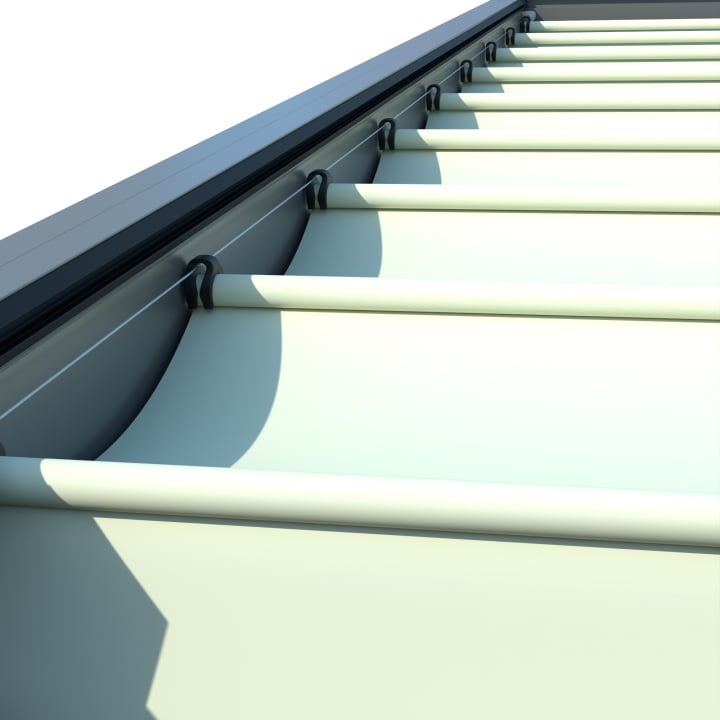
The safest way to remove mildew stains from an awning is to identify the fabric first. Whether you want to remove mildew stains from awning fabric or mould from an awning, the dyeing decides whether bleach is allowed or attacks the colour. The awning guide answers all other questions about your sun protection.
- Mildew stains are mould. On Agora: soak the spot in a 1:20 bleach solution, rinse clear, then wash again with a 1:20 washing-up liquid solution. The manufacturer confirms this causes no damage to the fabric.
- Dralon does not tolerate bleach, not even diluted: use a 1:20 washing-up liquid solution with a soft brush, and for very stubborn infestation diluted hydrogen peroxide 3 %, testing first on an inconspicuous spot.
- Polyester and polypropylene such as Polysun and Olefin: no bleach. Treat the stain immediately and only at the spot with a soap solution, working from the outside inwards.
- Prevention: only push the fabric together and store it when dry, and do not store it on concrete. The fabric bundle of the rope tension awning belongs under the roof.
Which fabric is on your awning?
We make the made-to-measure rope tension awning in four fabrics. The table shows what each tolerates against mildew stains. Our outdoor fabrics are also available as fabric by the metre.
| Fabric | Fibre and dyeing | Bleach | Treatment for mildew stains |
|---|---|---|---|
| Agora | Acrylic, solution-dyed | Diluted 1:20 permitted | Bleach solution 1:20, then washing-up liquid solution 1:20 |
| Dralon | Acrylic, conventionally dyed | No bleach, not even diluted | Washing-up liquid solution 1:20 and a soft brush, if necessary hydrogen peroxide 3 % after a test |
| Polysun | Polyester | Do not bleach | Neutral soap solution, at the spot only, hand wash only up to 30 degrees |
| Olefin | Polypropylene | Do not bleach | Neutral soap solution, at the spot only, if needed machine wash at 30 degrees on a gentle cycle |
Removing mildew stains from an awning, step by step
Make the fabric accessible
Take down the fabric panel or make the affected spot easy to reach. To do this, extend the awning fully so that no fold hides the stains.
Brush off dry
Remove loose dirt with a soft brush or with the vacuum cleaner and upholstery nozzle. This way you do not press it into the weave during wet cleaning.
Choose the treatment by fabric
Agora: 1 part bleach to 20 parts water. Dralon, Polysun and Olefin: 1 part washing-up liquid or neutral soap to 20 parts lukewarm water, at most 30 degrees.
Apply and leave to work
Apply the solution with a soft cloth, sponge or brush in circular movements and leave it to work briefly. For stubborn mould on Agora, soak the spot in the bleach solution. With polyester and polypropylene, work from the outside inwards, otherwise the stain gets wider.
Rinse clear
Rinse thoroughly with clear water. After the bleach solution, wash again with a 1:20 washing-up liquid solution and rinse clear once more. Soap residue otherwise attracts new dirt.
Dry in the shade
Leave the fabric to dry spread out in a shady, well-ventilated place. Only push the awning together once the fabric is completely dry.
Removing mildew stains with home remedies
You do not need a special awning cleaner. For an awning with mildew stains, products you usually have at home are enough. What matters is which of them your fabric tolerates.
Washing-up liquid 1:20
1 part washing-up liquid to 20 parts lukewarm water, at most 30 degrees. This is the basic solution for every fabric and for washing again after bleach.
Bleach 1:20 only on Agora
With solution-dyed acrylic, the colour runs right through to the core of the fibre. The diluted bleach solution therefore does not attack it. More about the fabric at Agora Liso.
Hydrogen peroxide 3 % on Dralon
If the washing-up liquid solution does not help on Dralon, try diluted hydrogen peroxide 3 %. Test it first on an inconspicuous spot. More about the fabric at Dralon.
Soft brush and cloth
A soft brush loosens the coating from the weave. Abrasive products do not belong on the fabric. How to treat other stains is explained at Cleaning an awning.
Removing bird droppings from an awning
Bird droppings are an organic stain. The faster you treat them, the more easily they come out. Here is how to go about it if you want to remove bird droppings from your awning.
Washing-up liquid solution first
Soak the stain with a 1:20 washing-up liquid solution, loosen it with a soft cloth in circular movements and rinse clear.
On Agora, bleach if needed
If a ring remains on Agora, use the 1:20 bleach solution. For bird droppings and sun cream, the manufacturer confirms this causes no damage to the fabric. Then wash again with washing-up liquid solution.
What damages awning fabric
Even diluted bleach can fade or stain conventionally dyed acrylic. Polyester and polypropylene also do not tolerate bleach.
The care instructions for polyester and polypropylene rule it out, and on laminated fabrics it loosens the layer. A soft brush and sponge are enough.
Hot water can affect the waterproofing, and the heat in the tumble dryer damages the acrylic fibre. Always air-dry.
No solvents, no petrol, no abrasive products and no dry cleaning.
If heavily soiled, the fabric panels of the rope tension awning may go in the gentle wash cycle at 30 degrees, Polysun by hand only. Every wash rinses out more of the protective finish, and the fabric then gets dirty faster. It is better to treat mildew stains at the spot.
With polyester and polypropylene, do not apply waterproofing spray, as it can react with the factory finish. More on this at Waterproofing an awning.
Preventing mildew stains
Moisture is the most common cause of mould in the fabric. If you keep the fabric dry, you will not have to remove mildew stains from the awning later at all.
Only push together when dry
Let wet fabric dry spread out before you push it together tightly. What applies in rain is explained at Leaving an awning out in the rain.
Fabric bundle under the roof
When retracted, the fabric of the rope tension awning pushes together into a bundle. Park it under cover, usually under the roof that the awning hangs from. It must not be left exposed to the weather.
Store dry and clean
Clean the fabric in autumn and give it one more day to air-dry rather than too little. Store it in a dry, well-ventilated place and not directly on concrete, where condensation forms.
Check in spring
Brush the fabric down thoroughly once before the season. Treat stains from storage as described above. Green deposits from algae or moss are a separate topic: Removing green deposits from an awning.
Removing wrinkles from an awning

With the rope tension awning, wrinkles are part of the design. When retracted, the fabric lies together as a bundle, and in the cloud look it deliberately sags between the cross tubes. If the tubes slide downwards on a slope, a cloud strap keeps the spacing even. You treat creases in the fabric itself depending on the fibre.
- Acrylic such as Agora and Dralon: iron only at a low temperature.
- Olefin: iron only on a low setting.
- Polysun: do not iron.
- If stains or wrinkles will not come out, it is worth looking at Re-covering an awning.
Frequently Asked Questions
Sources
Last reviewed: 23.10.2026 · Reviewer: Germes-Team
Not sure which fabric is on your awning?
Send us a photo of the fabric and the stain. We will tell you which treatment the fabric tolerates and what you had better avoid.